
28 September 2025 Sunday
 News
News
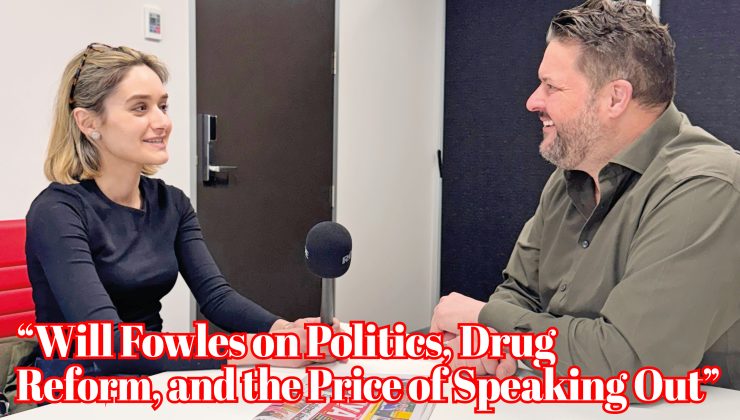
Dilan: Coming from a well-off family of business owners, why get into politics when you could be doing anything else?
Mr. Fowles: I’ve always felt a sense of obligation to give back, especially given the fortunate circumstances I was born into. And for me, politics ultimately became the way to do that.
Dilan: You’ve experienced both party politics and being an independent member of parliament. What have been some of the challenges or downsides of being an independent politician compared to working within a party structure?
Mr. Fowles: Being independent is quite different, it’s undeniably freeing. I’m able to vote according to my conscience on every issue debated in parliament. On the downside, I miss some of the teamwork that goes on within a party.
Dilan: Since being elected for Ringwood, what has been your focus?
Mr. Fowles: I’m proud of the advocacy that we’ve done regarding housing. It’s not just an economic issue; it’s a social issue. We need to secure people into long term safe accommodation.
The Specialist Homelessness Services Annual Report 2023–24 found that the key demographics experiencing problematic drug and/or alcohol use were predominantly Victorian males who were also facing homelessness. A high proportion of these clients were First Nations people.
Dilan: Would you agree that the media has sensationalised crime?
Mr. Fowles: Firstly, it’s important to distinguish between petty crimes and more serious offences. Data shows that Victoria is safer now than it was 20 years ago but the use of smartphones has led to increased recording of crime.
Dilan: You’ve been open about your personal struggle with substance abuse. Based on your experience, how can the government better approach this issue as a health matter rather than a criminal one?
Mr. Fowles: There’s an important debate we need to have around decriminalisation. As a society, we need to be mature enough to recognise that jailing people for recreational drug use isn’t an effective use of resources. Some drugs are highly physically addictive, while others have far less risks. So, we need to take a mature approach in assessing those differences. We must let the scientific evidence drive the outcome.
According to the 2022–2023 National Drug Strategy Household Survey (NDSHS) conducted by the Australian Institute of Health and Welfare, illicit drug use remains prevalent in Australia, with 47% of people aged 14 and over reporting lifetime use. While these rates have remained stable since 2019, they have increased since 2007.
Dilan:Substance abuse is often associated with homelessness, so I hope that seeing someone like you openly face this challenge can help reduce stigma and encourage nuanced conversations around this issue.
Mr. Fowles: I’ve been open about my struggles from the beginning. I struggled with the transition into public life and started drinking a lot. But I was fortunate enough to get the help I needed and make the necessary changes in my life. Unfortunately, not everyone has access to those resources that I had access to.
Dilan: Mental health has become a significant issue in our country, with men making up a large proportion of those numbers. Do you have any criticisms of how the government is addressing this issue?
Mr. Fowles: I think the Government has done great work in regards to mental health. What we are seeing though is that some of the monetary budget pressures are starting to affect the delivery of the government’s mental health plan services.
Nearly half of all Australians aged 16 to 85 have experienced a mental disorder at some point in their lives, according to the Australian Bureau of Statistics.